Dentistry has always been reactive. You feel pain, you go to the dentist, the dentist fixes the problem. That has been the standard model for decades. But something is shifting, and it is shifting fast.
Artificial intelligence is quietly changing the way dental professionals work. Not in a futuristic, science-fiction kind of way. In a very practical, already-happening-in-clinics kind of way.
What Predictive Dentistry Actually Means
Most people have never heard the term predictive dentistry. And that is not surprising, because until recently, it was mostly a concept discussed in research papers and academic conferences.
The idea is simple. Instead of waiting for a problem to show up, dentists use data and technology to spot what is coming before it arrives. Think of it like weather forecasting, but for your teeth.
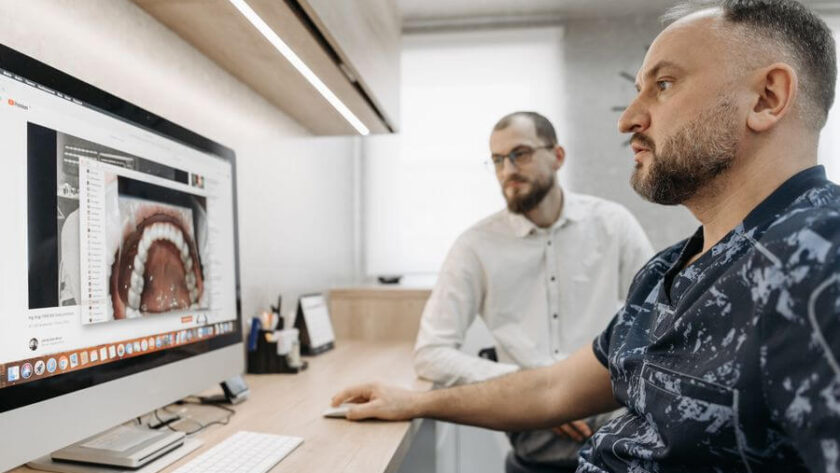
AI makes this possible by processing enormous amounts of dental data, things like X-rays, patient history, bite patterns, and even genetic factors, and finding patterns that a human eye simply cannot catch at scale. A dentist looking at an X-ray might miss a tiny shadow that indicates early enamel erosion. An AI system trained on millions of images will flag it immediately.
The real power of AI in dentistry is not that it replaces clinical judgment. It is that it gives clinicians a second opinion that never gets tired, never rushes, and never misses a pattern.
Early Detection Changes Everything
There is a reason dentists say that catching a cavity early saves you from a root canal later. The earlier you catch a problem, the simpler and cheaper the solution.
AI tools are now being used to detect early signs of:
- Tooth decay, often before it becomes visible to the naked eye
- Gum disease, by analyzing bone density changes in X-rays over time
- Orthodontic issues, predicting how teeth will shift and what interventions will have the best outcome
- Oral cancer, through pattern recognition in soft tissue images
- TMJ disorders, by correlating jaw movement data with reported symptoms
This is not about replacing the dentist. It is about giving them a tool that works like a highly trained assistant who has reviewed millions of patient cases and remembers every single one of them.
Treatment Planning Gets a Serious Upgrade
Planning a treatment used to rely heavily on experience and intuition. A good dentist develops a sense over years of practice. AI does not replace that sense. It adds another layer of precision on top of it.
For orthodontic cases, AI can now simulate how teeth will move over the course of treatment, giving both the clinician and the patient a realistic preview of the outcome before anything starts. That changes the conversation in the consultation room completely.
For implants, AI systems can analyze bone volume and density, map nerve positions, and suggest optimal placement angles with a level of detail that manual planning simply cannot match.
Research published through the American Dental Association’s Science and Research Institute has highlighted how digital tools and AI-assisted diagnostics are showing measurable improvements in treatment accuracy across multiple clinical settings. This kind of institutional support signals that AI in dentistry is no longer experimental. It is entering the mainstream.
Efficiency Behind the Scenes
Here is something most patients never think about: a significant portion of what slows down dental practices has nothing to do with the clinical work. It is the administration. Scheduling, insurance claims, patient follow-ups, record management.
AI is quietly handling more and more of that work. Automated systems are now capable of:
- Scheduling appointments based on treatment urgency and chair availability
- Flagging insurance issues before they become claim denials
- Sending personalized follow-up reminders based on individual patient history
- Generating clinical notes from voice dictation during procedures
This frees up the dental team to focus on what they actually trained to do. Patient care.
What This Means for Patients
If you have ever sat in a dental chair wondering whether the treatment plan in front of you is really the best option, AI gives your dentist a much stronger foundation for that answer.
Procedures are becoming more precise. That precision translates directly into less invasive treatments, shorter recovery times, and better long-term outcomes. A filling placed with AI-guided diagnostics and digital planning is more accurate than one placed without those tools. That accuracy matters ten years down the line.
There is also something to be said for the patient experience itself. When a dentist can show you a digital simulation of your treatment outcome, walk you through the data behind the recommendation, and explain what the AI flagged and why, it builds trust. You are not just being told what needs to happen. You are being shown.
The Human Element Still Comes First
It would be easy to read all of this and assume that dentistry is heading toward some kind of automated, screen-based experience where the human dentist becomes optional. That is not what is happening.
AI is a tool. A powerful one. But the dentist is still the one who reads the room, who notices that a patient is anxious, who makes the judgment call when the data is ambiguous, who builds the relationship that keeps patients coming back for preventive care instead of only showing up when something hurts.
The best outcomes will always come from combining what AI does well with what skilled, experienced clinicians do well. Data plus judgment. Pattern recognition plus empathy.
Where This Is All Going
The trajectory is clear. Dental practices that adopt AI tools thoughtfully will be able to offer earlier diagnoses, more personalized treatment plans, and measurably better outcomes. The gap between a practice using these tools and one that is not will only grow wider over time.
Patients will start expecting this level of precision. And dentists who understand how to work alongside AI rather than resist it will be the ones defining what great dental care looks like in the next decade.
Predictive, personalized, and far more dependable than anything we have had before. That is where dentistry is going, and AI is what is getting it there.