
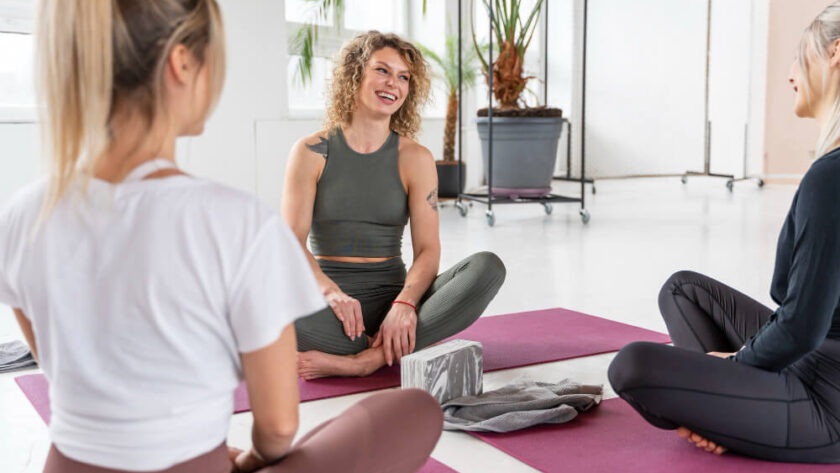
When you finally step off the student mat and sit at the front of the room, the world looks different. You aren’t just practicing anymore; you are holding space. Most training programs focus heavily on anatomy and the perfect downward dog, but the “secret sauce” of a long-term career actually lies in yoga teacher ethics and professionalism.
It’s a strange transition. One day you are joking with your friends in the back row, and the next, those same friends are looking to you for guidance. Navigating this shift requires more than just a certificate; it requires a rock-solid internal compass.
Mastering the Role Shift
Any time you lead a class, your relationship with the room changes. This concept of “playing the role” is often the hardest part for new instructors. You have to balance being approachable with being an authority figure.
When you are teaching, you aren’t just focusing on your own breath or alignment. You are managing the energy, thoughts, and physical safety of twenty different people. This responsibility means your internal standards have to rise.
Expert Observation: I’ve seen many brilliant practitioners fail as teachers because they couldn’t separate their personal friendships from their professional role. It is okay to have friends in class, but once the “Om” starts, everyone must be treated with the same neutral, professional care.
The Critique Trap
New teachers often feel a massive wave of “imposter syndrome.” To compensate, they might ask students for feedback after class, like: “Was that sequence okay?” or “Did I talk too much?”
Stop doing this immediately.
While it feels like you are being humble, you are actually projecting self-doubt. Your students are there to be led, not to act as your mentors. If you need a critique, ask a senior teacher to observe you. To your students, you must remain the steady anchor of the room. A great resource for understanding the psychological boundaries of this role can be found in the AMA’s guidelines on professional boundaries, which, while medical, offer a perfect parallel for the “power dynamic” in wellness.
Redefining Physical Adjustments
In 2026, the “hands-on” approach is no longer the default. It is a high-stakes responsibility. Physical adjustments can be transformative, but they can also be intrusive if not handled with absolute professionalism.
The Consent Rule: Never assume a student wants to be touched. Use “consent chips” or ask for a simple hand-raise during the first child’s pose.
The “Why” Test: Before you reach out to adjust someone, ask yourself: “Can I achieve this with a verbal cue instead?” If the answer is yes, keep your hands to yourself.
Observe Body Language: If a student tenses up when you approach, back off instantly. Their comfort is infinitely more important than their alignment.
Creating the “Safe Container”
A yoga class is a place of vulnerability. Students often release suppressed emotions on the mat. As a professional, you are the guardian of that “container.”
This means maintaining strict confidentiality. If a student shares a personal struggle with you after class, that information stays with you. Professionalism also means being punctual and dressing in a way that shows respect for the tradition. If you show up five minutes late looking disheveled, you’ve lost the room before you’ve even opened your mouth.
Integrating the Yamas into Your Lifestyle
True yoga teacher ethics and professionalism extend far beyond the sixty minutes of your class. It’s about “intentional living.”
If you preach mindfulness and healthy living but your students see you acting recklessly or unkindly in public, your credibility vanishes. You don’t have to be a saint, but you should strive to be a reflection of the values you teach. This is where the Yamas (social restraints) and Niyamas (self-observances) become your business plan.
Satya (Truthfulness): Be honest about your skill level. If you don’t know the answer to a question about an injury, say so. Referring a student to a doctor is a sign of a pro, not a beginner.
Ahimsa (Non-violence): This applies to your words. Avoid criticizing other teachers or yoga styles in your class. It only creates a culture of judgment.
The Reward of Integrity
Ethics aren’t just a list of “don’ts.” They are the tools that build a loyal community. When students feel safe, respected, and treated fairly, they keep coming back. They might forget the specific sequence you taught, but they will never forget how they felt in your presence.
Maintaining high standards isn’t always easy, but it is the only way to transform “teaching yoga” from a hobby into a respected, lifelong profession.


