Deciding how to handle the early years of your child’s education is a big move. I remember looking at local preschools and feeling like none of them quite fit the rhythm of our family. Between the drop off schedules and the rigid routines, it felt like we were losing the simplicity that childhood deserves. That is why I eventually leaned into the idea of creating a personalized Preschool At Home Curriculum. It wasn’t about recreating a sterile classroom in my living room. It was about finding those pockets of time where learning happens naturally through play and connection.
Many parents worry that they aren’t “qualified” to teach their own kids. I used to teach preschool professionally before I became a mom, and I can tell you a secret. You don’t need a degree to help a four year old understand the world. You just need to be observant. If you pay attention to what makes your child’s eyes light up, you have already found your lesson plan. Whether you are simplified by necessity because of younger siblings or just want to save on tuition, teaching at home allows you to follow your child’s lead rather than a bell schedule.
Making The Decision To Stay Home
The choice to keep your child home for preschool often comes down to family dynamics. For us, having twins on top of older children made the logistics of a traditional school feel overwhelming. I wanted to simplify our lives, not add another commute to the mix. If you are on the fence, I always suggest looking at your child’s current attention span and social needs. Some kids thrive in a big group, but many others actually learn better when they are in a quiet, safe environment with their primary caregiver.
One major benefit is the flexibility. There is no frantic morning rush to get out the door. If we had a doctor’s appointment or a spontaneous playdate with friends, we could just move our learning session to the afternoon. This lack of pressure creates a much more relaxed atmosphere for the child. When a child is relaxed, their brain is far more open to absorbing new concepts like phonics or basic math.
How To Structure Your Learning Day
You don’t need to spend six hours a day “schooling” a preschooler. In fact, please don’t do that. At this age, their brains are like sponges, but their focus is short. We found that working on focused activities just two or three days a week was more than enough. The key is consistency in the small things rather than intensity in the big things.
We always started our day with what I call “together time.” This involved a simple calendar, maybe a few seasonal songs, and a poem. It signals to the child that we are transitioning into a time of discovery. Songs are particularly powerful because they use rhythm and rhyme to lock information into the long term memory. Think about the ABC song. It is the perfect example of how music makes a difficult concept stick.
Use the physical world as your classroom. If you are teaching the letter G, go for a walk and look for green grass, garden gates, and grey stones. This context makes the abstract letter feel real and relevant to their lives.
Balancing Teacher Guidance With Child Discovery
There is a lot of debate about whether preschool should be child led or teacher directed. My experience tells me that the best results come from a blend of both. I knew what my daughter needed to learn to be ready for kindergarten, but I allowed her interests to dictate how we got there. If she was obsessed with butterflies, we did our counting lessons with butterfly cutouts. If she wanted to play in the dirt, we turned it into a sensory bin activity.
You are the world’s leading expert on your own child. You know their quirks, their fears, and their favorite colors. Use that “insider info” to build your Preschool At Home Curriculum. It can cost you next to nothing. Most of our best lessons were done with construction paper, some markers, and items we found around the house. You can find more about the developmental milestones for preschoolers to help you gauge what levels of challenge are appropriate for each age group.
Building A Solid Foundation In Literacy And Math
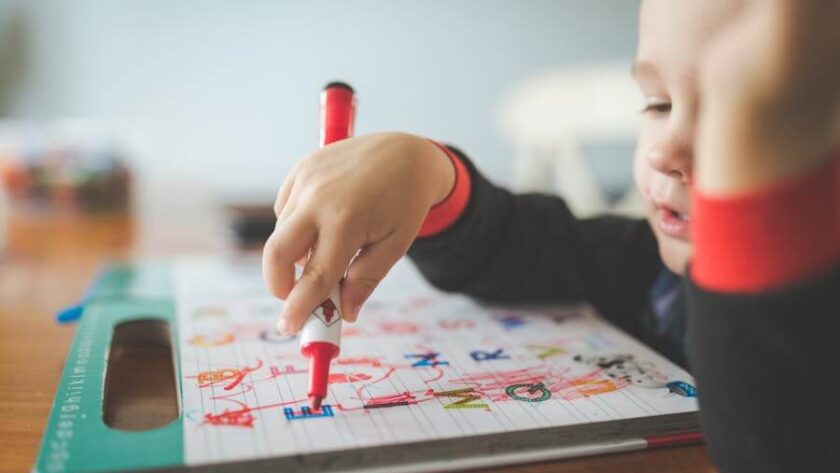
Literacy isn’t just about flashcards. It starts with a love for stories. We made library trips a weekly ritual. We would grab books about the current season, which naturally taught science and social studies concepts without it feeling like a “lesson.” During our journal time, my daughter would draw a picture of her favorite part of the story, and I would write down the words she dictated to me. This helped her see the connection between spoken words and written text.
For math, we kept it tactile. Counting pumpkin seeds in the fall or feathers in the spring makes the concept of “quantity” tangible. It is one thing to see the number five on a page, but it is another thing entirely to hold five heavy seeds in your hand. We also played games like “Name Hopscotch.” I would draw the letters of her name in chalk on the driveway, and she would jump to each one as we spelled it out. It gets them moving and learning at the same time.
Review the alphabet often but keep it fresh by using different materials like sand trays or salt painting.
Focus on number recognition through everyday tasks, like counting how many plates we need for dinner.
Practice sorting and classifying by grouping toys by color, size, or shape during cleanup time.
Creating Learning Centers At Home
Once your child has mastered a few activities, you can set them up as learning centers. I used to clear off the dining room table and set up three different stations. One might be a sensory bin filled with rice and hidden plastic letters. Another might be a simple art project with different textures of paper. The third could be a counting game with buttons.
This allows the child to move between activities at their own pace. It encourages independence and gives you a few minutes to breathe or start dinner while they are safely engaged. Learning centers are a great way to reuse activities you have already taught, which saves you prep time and reinforces what they have already learned.
Don’t stress about “finishing” the curriculum. Some days the best learning happens during a long walk in the woods or while baking cookies together. Those moments count just as much as a structured activity.
Preparing For The Transition To Kindergarten
The ultimate goal for many of us is to ensure our kids are ready for the “big school” when the time comes. My daughter entered kindergarten already knowing how to read, but more importantly, she entered with a genuine curiosity and a love for learning. That confidence is the most valuable gift you can give them.
Research has often shown that universal preschool programs don’t always produce better students in the long run. The missing ingredient is often the one on one connection with a parent or a dedicated caregiver. You are the key to their success. Your time, your patience, and your willingness to play are what build the platform they will stand on for the rest of their lives.
When you look back on these years, you won’t remember the worksheets. you will remember the songs you sang together and the look of pride on their face when they finally spelled their name correctly. This Preschool At Home Curriculum is simply a tool to help you create more of those moments. Keep it light, keep it fun, and enjoy the journey of watching your child discover the world.