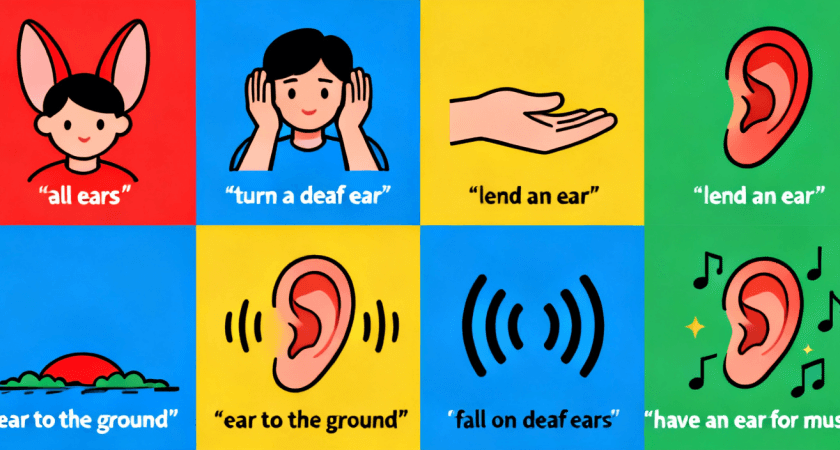
English is a language built on layers of subtext. If you have ever felt like a conversation was moving faster than you could track, it might be because of idioms. These colorful expressions act as a shorthand for complex human emotions and social situations. Specifically, common idioms about ears are some of the most versatile tools in your linguistic toolkit. They describe everything from deep empathy to total negligence, and understanding them is the difference between sounding like a textbook and sounding like a native speaker.
I’ve spent years analyzing how people actually communicate, and the truth is that people rarely say “I am listening closely.” Instead, they say they are “all ears.” It is more visceral, more human, and frankly, more engaging. Let’s break down these expressions so you can stop just translating words and start truly communicating.
Master The Art Of Attentive Listening
Most ear-related phrases focus on the quality of attention we give to others. In a world full of distractions, knowing how to describe a focused listener is a great way to build rapport. When a friend says they are all ears, they are giving you a green light to share your story without interruptions. It is a warm, welcoming phrase that signals total focus.
Another powerful expression is to lend an ear. This isn’t just about hearing; it’s about emotional support. When you lend an ear to someone, you are offering them a safe space to vent or process their thoughts. It is a sign of a high-quality friendship. On the more technical side, someone who has a good ear for music or a sharp ear for detail possesses a natural talent for picking up nuances that others might miss. This is the difference between just hearing a song and understanding the subtle shift in a bassline.
Pro tip: If you want to show you are a “pro” at social intelligence, tell someone you are acting as a sounding board. It suggests you aren’t just listening, but helping them bounce ideas back and forth to reach a solution.
The Consequences Of Ignoring Information
We have all been in a situation where our advice seems to disappear into thin air. In professional settings, we often say that a suggestion fell on deaf ears. This is a punchy way to describe a lack of response or interest from a group or a manager. It carries more weight than simply saying “they ignored me” because it implies a total failure of the communication loop.
Then there is the classic: in one ear and out the other. This usually happens when someone is physically present but mentally miles away. I see this a lot in high-stress environments where people are overloaded with information. If you tell a colleague a crucial detail and they forget it five minutes later, it didn’t just “slip their mind”—it went in one ear and out the other.
Navigating Secrets And Unofficial Information
Some of the most “insider” idioms revolve around how we get information that isn’t quite public yet. To have an ear to the ground is a vital skill for anyone in business or community organizing. It means you are staying alert to the early signs of change. You aren’t waiting for the official announcement; you are sensing the vibration of the news before it hits.
If you happen to catch wind of a secret, you might have heard it through the grapevine. This is one of my favorite expressions because it perfectly captures the messy, twisting path that gossip takes as it travels from person to person. It is rarely 100% accurate, but it is always fast. If you need to tell someone something privately, you might whisper a word in their ear. It is a discrete way to signal that what follows is for them and them alone.
Itchy ears often refer to someone who is actively seeking out gossip.
Eavesdropping is the more “spy-like” version, where you are listening to a conversation that you aren’t supposed to be part of.
Bending someone’s ear is what happens when that gossip goes on for too long and becomes a bit of a burden for the listener.
Dealing With Unplanned Situations
Sometimes, life doesn’t give you a script. In those moments, you have to play it by ear. This phrase actually comes from the music world, referring to musicians who could play a piece without looking at the sheet music. In daily life, it means you are staying flexible. If you are traveling and don’t have a hotel booked, you are playing it by ear. It shows a level of confidence and adaptability that is highly valued in both personal and professional circles.
However, be careful not to confuse this with being disorganized. Playing it by ear is a strategy for handling the unknown, not an excuse for being unprepared. It’s about reading the room and reacting to the “music” of the situation as it unfolds.
Understanding Complex Social Cues
There are a few idioms that use “ear” imagery in more abstract ways. For instance, when someone gives you an earful, you aren’t just being spoken to—you are being scolded. It is a loud, long, and usually unpleasant experience. On the flip side, someone who acts like butter wouldn’t melt in their mouth is using a calm exterior to hide a more complex or perhaps mischievous personality.
Remember that idioms are like spices. Use them correctly, and they enhance the flavor of your speech. Use too many at once, and it can feel forced.
To truly master common idioms about ears, you need to hear them in context. Pay attention to how characters in movies or colleagues in meetings use them. Notice the tone of voice that accompanies “turn a deaf ear” versus the excitement behind “I’m all ears.”
Practical Exercises For Real World Use
The best way to make these phrases stick is to use them. Try incorporating one into your next email or conversation. Instead of saying “I’ll listen to you,” try “I’m happy to lend an ear.” You will notice that people respond differently to idiomatic language—it feels more intimate and less robotic.
If you are looking for more ways to sharpen your language skills, Cambridge Dictionary’s blog offers fantastic deep dives into the origins of these phrases. Studying the “why” behind the “what” makes it much easier to remember them during a fast-paced conversation.
Learning common idioms about ears isn’t just a vocabulary exercise. It is a way to better understand the nuances of human interaction. Whether you are keeping your ears open for a new opportunity or deciding to play it by ear during a weekend trip, these expressions help you navigate the world with a bit more style and a lot more clarity. This is why every modern communicator needs to have a few of these ready to go.