
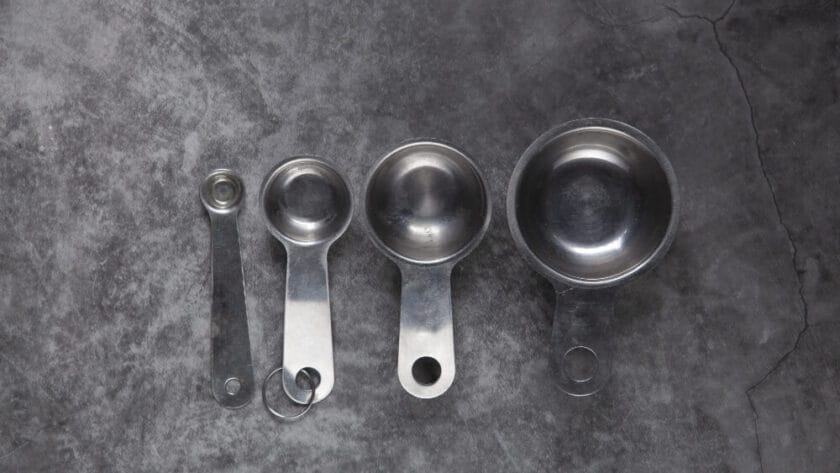
Every home cook has experienced that momentary pause in the heat of the kitchen: your hands are covered in flour, the oven is preheating, and a new recipe calls for a specific measurement that your current set of tools simply doesn’t account for. You might be holding a quarter-cup measure but need to know the equivalent in tablespoons to scale a recipe down, or perhaps your measuring cup is in the dishwasher, leaving you with only a set of spoons. While the core question—how many tablespoons in a 1/4 cup—seems like a simple math problem, the answer opens a door to the fascinating, and often confusing, world of culinary standardization, regional variances, and the science of baking.
The Definitive Answer and Global Variations
For those seeking the immediate, standard answer relevant to the majority of modern recipes found in the United States: there are exactly 4 tablespoons in 1/4 cup. This is based on the standard US Customary System where one full cup contains 16 tablespoons. Therefore, dividing 16 by 4 gives us the magic number of 4. However, the world of kitchen metrics is rarely one-size-fits-all, and assuming this conversion works universally can lead to disastrous results, particularly in the delicate chemistry of baking.
The conversion landscape changes drastically when you cross international borders. If you are following a recipe from an Australian food blogger or cookbook, the math shifts. In Australia, the definition of a tablespoon is generous, holding 20 milliliters compared to the standard 15 milliliters found in the US and the UK. Consequently, in an Australian kitchen, there are only 3 Australian tablespoons in a 1/4 cup. This discrepancy highlights why seasoned chefs emphasize the importance of knowing the origin of your recipe. Using a US tablespoon measure for an Australian sponge cake recipe could result in under-seasoning or a lack of leavening agents, fundamentally altering the flavor profile and texture of the dish.
The Anatomy of Measurement: Why Standards Matter
To understand why these conversions are necessary, we must look at the history of the tools themselves. The standardization of the “cup” and “tablespoon” is a relatively modern convenience. Before the late 19th century, recipes often called for a “teacup” of milk or a “walnut-sized” piece of butter, leading to wild inconsistencies. Today, we rely on the standardized US cup, which is legally defined for labeling purposes as 240 milliliters, though traditionally it is approximately 236.6 milliliters.
The tablespoon, or “tablespoonful,” operates as a sub-unit of this system. In the United States, it is defined as 1/16th of a cup or 3 teaspoons. This “Rule of Three” (3 teaspoons to 1 tablespoon) is the bedrock of American culinary math. However, the rise of global cuisine and the internet means a cook in New York might be attempting a recipe from London. In the UK, while the metric system is king, many old-school recipes still use the Imperial cup. Interestingly, while the UK has largely adopted metric measurements, their specific “tablespoon” can sometimes be conflated with older dessert spoons in antique texts, adding another layer of complexity. For precise results, relying on standardized baking authorities helps navigate these historical nuances.
The Great Debate: Volume Versus Weight in Modern Baking
While knowing that 4 tablespoons equal 1/4 cup is essential for quick conversions, the modern culinary trend is moving aggressively away from volume measurements entirely. Professional bakers and serious enthusiasts are increasingly abandoning cups and spoons in favor of digital kitchen scales. The reason is density. A 1/4 cup of all-purpose flour can weigh anywhere from 30 grams to 45 grams depending on how it was scooped—whether it was packed down or aerated. This variance can ruin a macaron or a soufflé.
When you use a tablespoon to measure dry ingredients, you introduce human error. However, volume measurements remain the standard for liquids and are deeply ingrained in American home cooking culture. If you are forced to use volume for dry goods, culinary experts recommend the “dip and sweep” method: fluff the ingredient, dip the cup or spoon in, and level it off with a straight edge. This technique attempts to mimic the precision of weighing, though it is never quite as accurate as the data provided by institutions like the National Institute of Standards and Technology. As we move further into the 2020s, we are seeing a hybrid approach in recipe writing, where authors provide both volume (tablespoons/cups) and weight (grams) to accommodate all skill levels.
Navigating the International Kitchen: US, Imperial, and Metric
The confusion between measurement systems is not just about the spoons; it is about the cup itself. A “metric cup,” used in countries like Canada, Australia, and New Zealand, is defined as exactly 250 milliliters. The US cup is approximately 237 milliliters. While a difference of 13 milliliters might seem negligible in a soup or a stew, it is significant when dealing with potent ingredients like spices or chemical leaveners measured in fractions of a cup.
This is where the math of converting tablespoons becomes a critical skill. If you are using a 250ml metric cup but using US 15ml tablespoons, a 1/4 metric cup (62.5ml) is actually slightly more than 4 US tablespoons (which would only total 60ml). This granular level of detail is why “baking is chemistry, but cooking is art.” Cooking allows for these slight deviations, but baking demands rigid adherence to the ratios. Understanding these underlying systems allows a cook to troubleshoot why a batter might be too runny or a dough too dry.
The Mathematics of Scaling: Converting Fractions and Ratios
Navigating fractions without a calculator is a skill that saves time and reduces mess. Beyond the standard “4 tablespoons to 1/4 cup,” it is helpful to visualize the progression of measurements. Since there are 16 tablespoons in a whole cup, the math follows a simple linear progression. A half-cup contains 8 tablespoons. Three-quarters of a cup contains 12 tablespoons. For those tricky measurements like “one-third of a cup,” the conversion is less clean—it equals 5 tablespoons plus 1 teaspoon.
Visualizing these amounts is helpful for portion control and nutrition as well. In an era where dietary tracking is common, knowing that 4 tablespoons of oil constitute a 1/4 cup can be a stark realization regarding caloric intake. This awareness is part of a broader trend of “mindful cooking,” where understanding the volume of ingredients aids in making healthier choices without needing to obsessively weigh every component.
Smart Kitchens and the Future of Recipe Calibration
We are currently witnessing the digitization of the kitchen, which is changing how we handle these conversions. Smart scales and connected mixing bowls now sync with tablets to automatically adjust recipes. If you only have 3 tablespoons of butter left but the recipe calls for a 1/4 cup (4 tablespoons), smart recipe apps can instantly recalculate the entire ingredient list to match the amount you have on hand. This eliminates the mental math and the risk of error.
Furthermore, the rise of AI-driven culinary assistants allows cooks to ask, “How do I substitute oil for butter in this volume?” or “Convert this US recipe to British metric.” These tools are bridging the gap between the analog tradition of Grandma’s recipe box and the precision of a laboratory. However, even with all this technology, the fundamental knowledge that 1/4 cup equals 4 tablespoons remains a necessary analog backup for when the battery dies or the internet goes down.
Ultimately, while the simple answer is that 4 US tablespoons make up a 1/4 cup, the application of this knowledge is what separates a novice from a master. Whether you are scaling down a recipe for one person or converting a vintage family recipe to modern standards, maintaining consistency is key. If you begin measuring with a specific set of spoons, finish with that same set to ensure the ratios remain relative to one another. As we embrace a more globalized food culture, understanding the language of volume—from the US tablespoon to the Australian metric cup—is an essential tool in every cook’s arsenal.